
VINELink Raleigh County Coverage
VINE reached West Virginia in December 2002 through DCR. A 2019 expansion covered all ten regional jails. Southern Regional Jail joined that network. That makes VINE a solid channel for custody checks and alerts on covered Raleigh County detainees. The jail serves six other counties too. So a facility match alone does not show where the arrest happened. The web search lives at VINELink, with state guidance on the official West Virginia DCR VINE page. The phone route is 1-866-WV4-VINE, also written 1-866-984-8463. Round-the-clock help and free registration are both listed, so view the state VINE phone and assistance information.
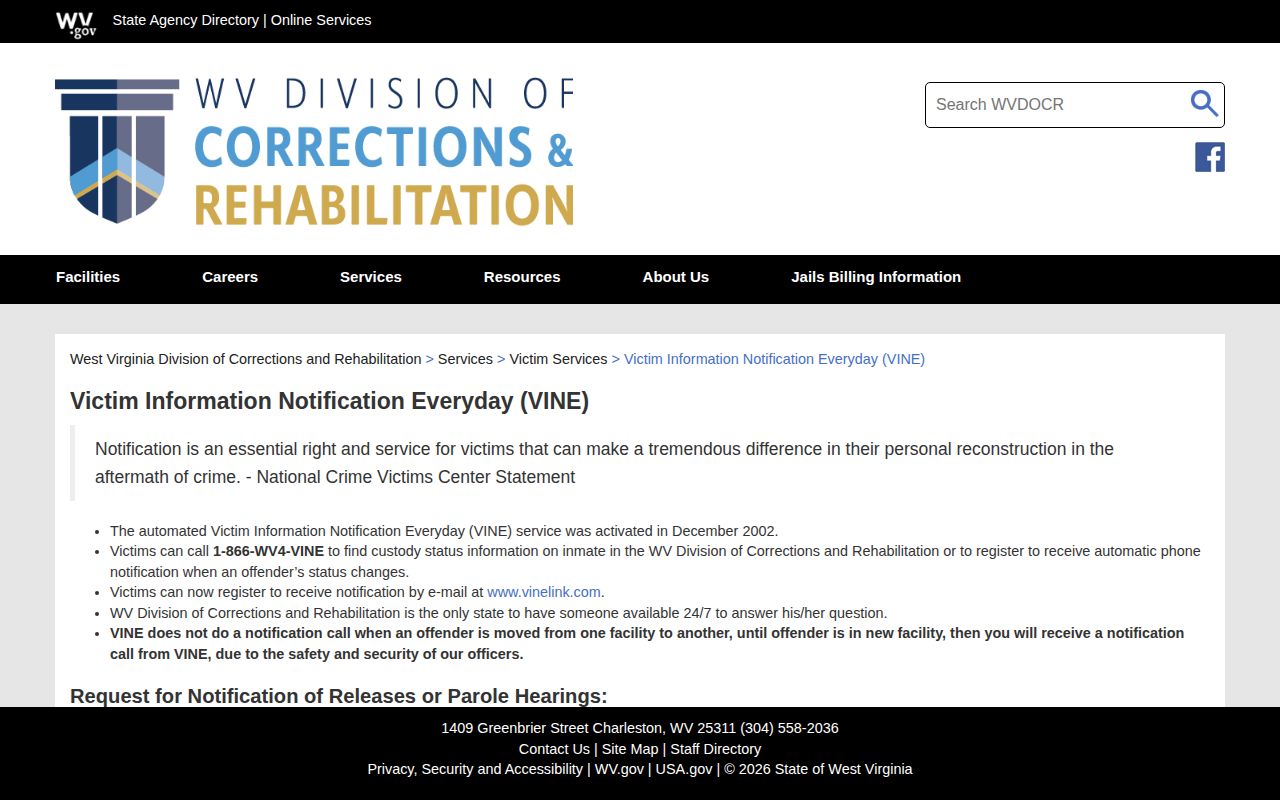
Labels and prompts change; trust the official state page.
Search a Raleigh County Person
VINELink works best when the person and likely custody system are already known. The state FAQ spells out the steps. Select West Virginia first. Then choose Search and Register. Pick a facility, and search by offender ID or a full last name plus at least a first initial. Common names demand extra care, so review every possible match before opening details or alerts.
- Open VINELink and select West Virginia as the service area.
- Choose the Search and Register option shown by the current interface.
- Select Southern Regional Jail or the appropriate facility set.
- Search by offender ID, or use full last name and the required first-name initial.
- Compare the displayed facility, identifier, status, and other details.
- Open the registration control only after confirming the correct person.
Never match on a photo alone. Compare the offender number, name suffix, facility, and any known agency or court context. Call the record-holding office if nothing lines up. A wrong registration can create confusion and disclose sensitive status changes to the wrong person. Open the VINELink state selection and search workflow.
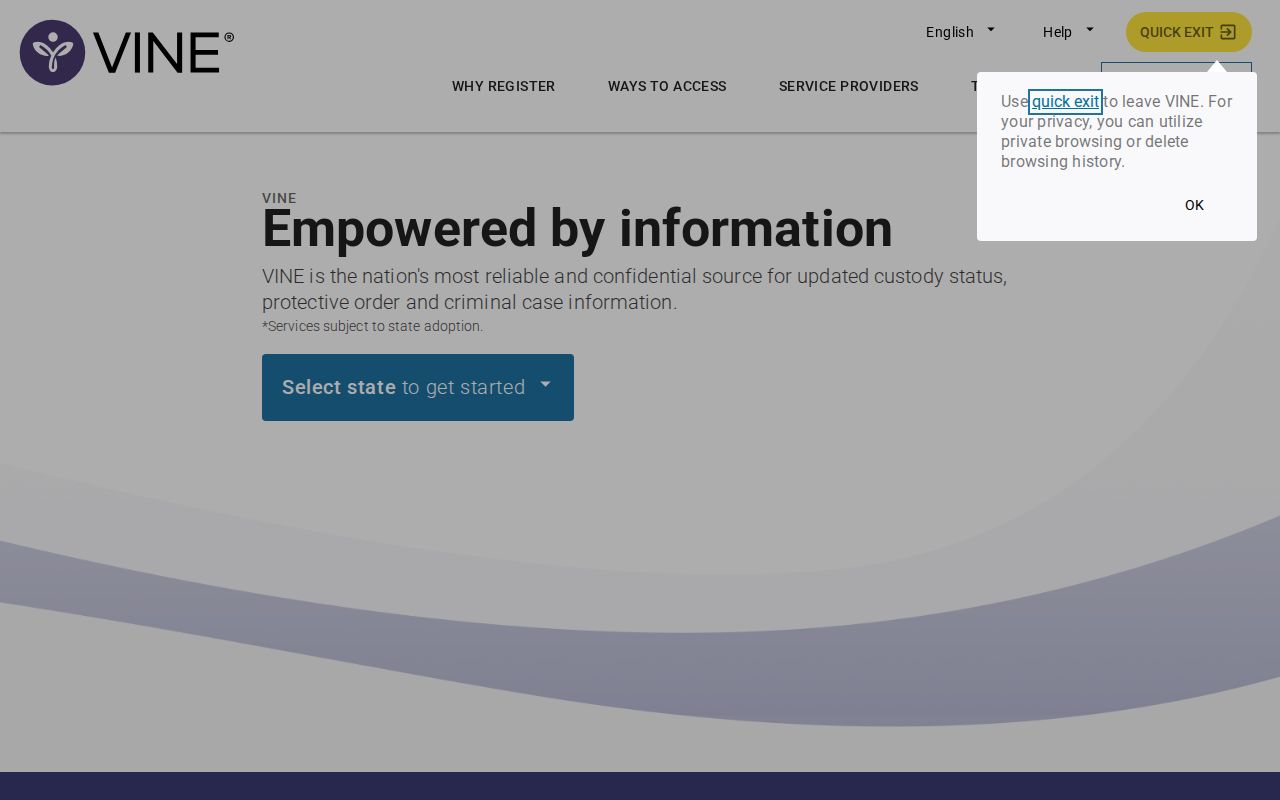
Selecting West Virginia routes the search to the state system that covers regional jails.
Raleigh VINELink Result Fields
Interface fields can change without notice. State materials treat custody status, facility, and notification registration as the core functions. Older specifications list name, offender number, housing location, hearing, and release data, though no current screen is guaranteed to show every field. Record only what the live result supplies.
| Possible field | What it can establish |
|---|---|
| Name | A candidate identity that still needs careful matching |
| Offender ID | A custody-system identifier for narrowing matches |
| Custody status | The covered status reported at the time checked |
| Facility | The reported institution, not necessarily arrest county |
| Notification option | A control for registering a future status alert |
| Release or transfer event | A custody change, not the final court disposition |
A status result will not identify every charge or supply a complete booking history. People also move between facilities. DCR warns that a transfer notice waits until the person actually reaches the new facility, for safety and security reasons. So search timing matters.
Register Raleigh Custody Alerts
Once the right person is confirmed, open the current details or registration control. Pick a contact method. Phone, email, text, and other options appear as the service allows, with phone registration using a self-selected four-digit PIN. Save the confirmation.
- Verify the person before starting registration.
- Select the notification method offered on the current screen.
- Enter only the contact information required by VINE.
- Create the four-digit PIN when registering by phone.
- Review the event types and save the registration confirmation.
- Keep official agency and court contacts available for verification.
Use alerts for real safety or family needs. Registration does not prove victim status, capture an arrest history, or subscribe anyone to court events. Guard the PIN. Update contact details directly through the service. For emergencies call 911; otherwise view the VINELink search or registration interface.
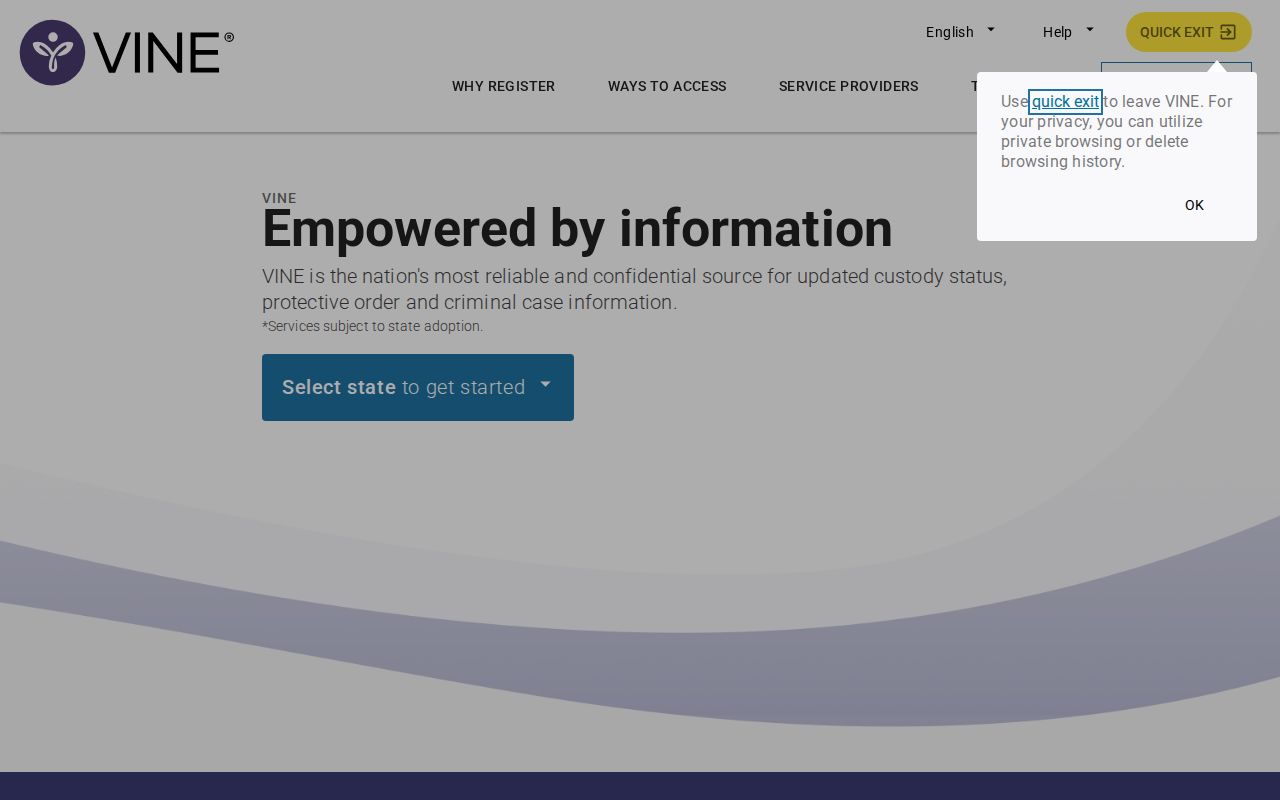
The image shows a neutral screen, not real data.
Transfer and Release Notifications
VINE reports covered custody changes. DCR explains that a transfer notice waits until the person actually reaches the new institution. Timing matters. A release alert covers custody status alone. Check the court separately for anything beyond custody.
Save the exact alert text and time if a status needs confirming later. Old notifications go stale. Contact DCR, the facility, or the proper court rather than relying on an aged alert. Automated systems lag, and a transfer can leave a gap before the new facility appears.
Section 62-12-23d adds a written notice path. It covers release and parole-hearing notices, and DCR says the request must go in writing to both DCR and the Parole Board because they are separate entities. A written DCR request auto-registers the person with VINE. The Parole Board request remains separate, and this statutory route differs from clicking a general VINELink notification option.
Fresh Raleigh Bookings May Lag
VINE answers one narrow question: is a person in covered state custody right now? A same-day arrest can slip past it. Transport delays are one reason. Medical clearance is another. Someone cited and released may never enter the system at all, and a fast bond can end the display period before you even look. Municipal, juvenile, and federal matters often fall outside.
For a fresh Raleigh County booking, start with the official DCR jail search and the daily admissions route. The Raleigh County Daily Arrest Report walks through that same-day path and the seven-county Southern Regional Jail wrinkle. Still nothing? Name the arresting agency and call its records unit. Say the system shows no covered result, not that the person was never arrested.
Raleigh County Sheriff keeps a written FOIA path for its records. Beckley Police runs its own Records Division, while Mabscott and Sophia contacts open the door to those municipal files.
VINELink Does Not Cover Everything
VINELink is not a universal search. It cannot replace the Federal Bureau of Prisons locator, the ICE Online Detainee Locator, a county warrant database, a court docket, or a permanent booking archive. Federal custody belongs in the federal system. ICE demands an exact name or an A-number, and the Marshals Service posts no county-style roster for federal pretrial prisoners.
| Question | Better source |
|---|---|
| Covered current regional-jail custody | DCR jail search and VINELink |
| Same-day intake | DCR Daily Incarcerations and jail search |
| Arrest report or booking photo | Arresting agency records custodian |
| Charge disposition | WV Judiciary and Raleigh County clerk |
| Federal sentenced custody | Federal Bureau of Prisons locator |
| Immigration custody | ICE Online Detainee Locator |
Do not merge these systems into one arrest list. A DCR or VINE match shows current custody; an agency report documents the event; a court file gives the legal posture. Keep each source's own date and wording.
Verify a Raleigh VINE Alert
When an alert lands, open the VINE service yourself. Do not tap a link inside an unfamiliar message. Confirm the person, the facility, and the event. Then call the facility through a published number if the alert shapes an immediate plan. For Southern Regional Jail, trust the official DCR page over any private directory.
Its regional role still matters. The Beaver address sits inside Raleigh County. Yet people from seven counties may be held there. Location tells you little about jurisdiction. The case belongs to the arresting agency and the court. For an outcome, search the magistrate index and ask the clerk for copies. A release or transfer alert does not erase the original arrest. It says nothing about how the case ended.
Public Record Search
Sponsored Results